Comprehensive Metal Building Maintenance Guide and Checklist for Longevity and Performance
Metal building maintenance means scheduled inspection, targeted repairs, and preventative care designed to protect structural integrity, reduce repair costs, and preserve manufacturer warranties. Regular upkeep prevents small issues—like loose fasteners, trapped moisture, or degraded sealant—from becoming expensive structural problems, and it maintains energy efficiency and occupant safety. This guide explains inspection cadence, common problems and fixes, seasonal checklists, component-level maintenance, recommended tools and materials, and how maintenance affects warranties so owners can plan effective long-term care. Readers will get practical, prioritized checklists for spring and fall, quick triage steps for leaks and rust, component-specific routines for roofs, panels, foundations, and HVAC, plus documentation tips to protect warranty coverage. If you need logistical support to schedule professional teams or arrange transport for inspection crews, see the boxed note below for a brief service reference and booking context. The remainder of the article focuses on hands-on building maintenance tips and an actionable checklist for owners and facility managers.
For scheduling help or to inquire about arranging maintenance logistics, consider contacting Metal Building Contractors Near Me — note that available site information indicates an associated service operates as a limousine rental provider in Houston, which may influence local transport arrangements.
How Often Should You Perform Metal Building Maintenance?
Metal building maintenance frequency balances routine DIY vigilance with scheduled professional inspections to catch issues early and protect warranties.
Owners should perform simple visual checks monthly, a more thorough walk-through quarterly, and schedule a comprehensive professional inspection annually, with immediate checks after severe storms or unusual events.
This cadence reduces corrosion risk, prevents water intrusion, and ensures fasteners and sealants remain functional; it also aligns with common warranty obligations that require documented routine care.
The next paragraphs give precise frequency guidelines per component and decision rules for when to escalate to professional services.
What Is the Recommended Inspection Frequency for Steel Buildings?
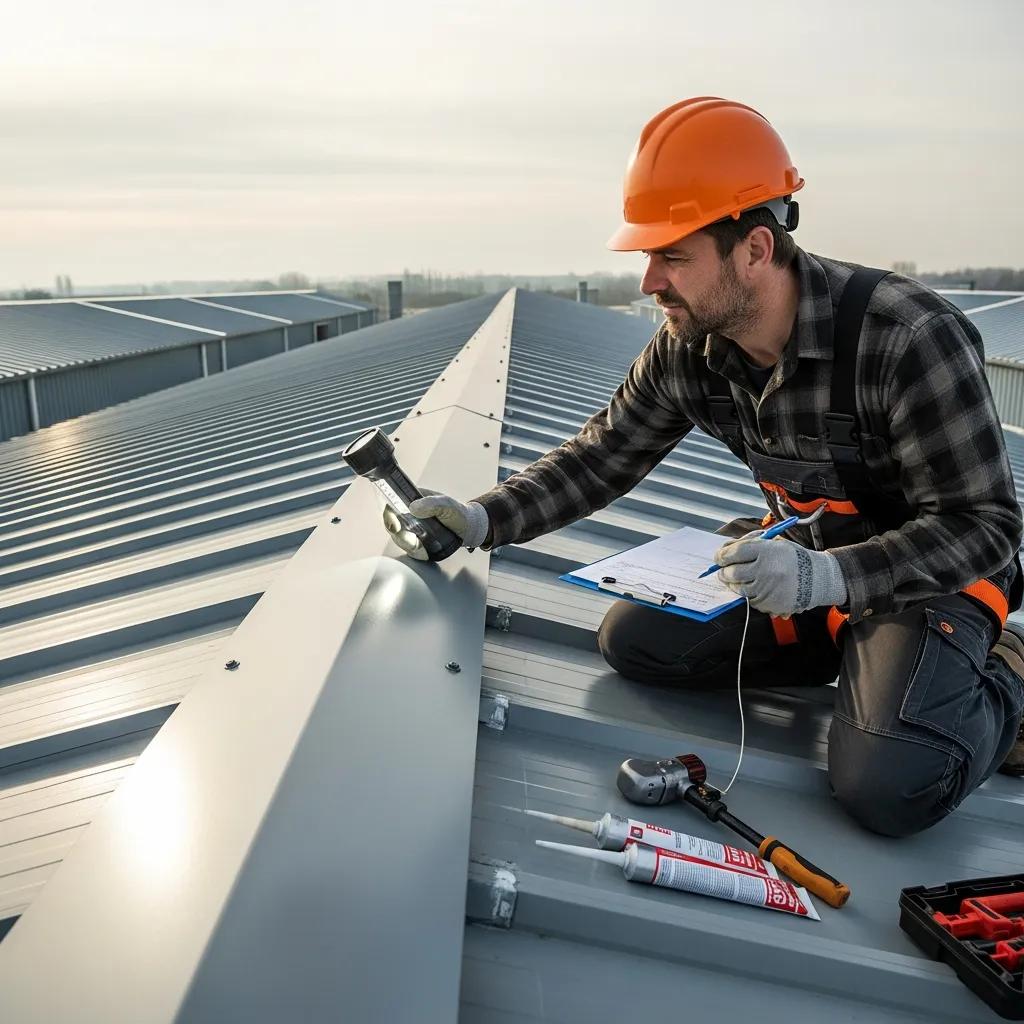
A component-based inspection schedule clarifies which parts need what attention and why, helping owners allocate time and resources effectively.
Roof panels and seams should receive visual inspection every quarter and a detailed check in spring and fall; fasteners and sealants merit quarterly checks with touch-ups as needed to prevent leaks.
Gutters and downspouts require debris clearing quarterly or after heavy storms to maintain drainage and avoid water pooling around the foundation, while HVAC filters and condensation pans should be checked monthly during active seasons.
Coastal or high-humidity environments and heavy-usage commercial buildings require more frequent monitoring because salt spray and intensive usage accelerate corrosion and wear; adjust cadence upward where exposure is greater to preserve finish and function.
When Should You Schedule Professional Maintenance Services?
Knowing when to call a professional prevents safety risks and protects warranty coverage by ensuring complex work meets manufacturer standards. Schedule professional services for structural concerns such as noticeable sagging, widespread corrosion through-thickness, seam separation, or persistent leaks that elude temporary sealing; also call pros for warranty-required inspections and for electrical, insulation, or major HVAC work. A qualified contractor typically provides a written report with prioritized repairs, photographic documentation, and recommendations—deliverables that are essential for claim support and long-term planning. Expect quicker escalation after storm events, and treat any visible deformation, unusual noises, or sudden drainage failures as triggers for a professional assessment.
What Are the Most Common Problems in Metal Buildings and How Can You Solve Them?
Metal buildings commonly face corrosion, leaks, condensation, loose fasteners, and drainage failures; each problem has a clear inspection cue and repair path to restore weather-tightness and structural reliability. Early detection—spotting bubbling paint, rust streaks, or wet insulation—lets owners perform targeted interventions like cleaning, sealing, and fastener replacement to avoid structural repair.
Common metal building problems and short triage actions:
- Rust and Corrosion: Remove loose rust, apply a rust converter, prime, and recoat to restore protection.
- Leaks at Seams or Fasteners: Temporarily contain with water-blocking tape, then reseal seams and replace failed fasteners.
- Condensation: Improve ventilation and insulation; use vapor barriers or dehumidification for persistent moisture.
- Loose or Backed-Out Fasteners: Inspect torque, replace damaged screws with neoprene-washer fasteners, and retorque to spec.
- Poor Drainage and Gutter Clogs: Clear debris, verify downspout routing, and repair sagging gutters to prevent foundation saturation.
How Do You Identify and Repair Rust and Corrosion on Steel Structures?
Detecting corrosion early relies on visual cues and simple tests to determine depth and extent, then following safe, stepwise treatment to stop progression and restore protective coatings. Look for bubbling paint, pitting, orange streaking, or flaking metal—these indicate active corrosion; use a wire brush or scraper to assess if corrosion is surface-level or has penetrated through.
For surface rust: clean the area, apply a rust converter to neutralize oxidation, prime with a corrosion-inhibiting primer (zinc-rich or galvanic primers where appropriate), and finish with a durable topcoat matched to exposure.
Further research highlights the importance of selecting effective primers for long-term substrate corrosion protection.
Metal Primers for Substrate Corrosion Protection
ABSTRACT: A Review of Modern Assessment Methods for Metal and Metal-Oxide Based Primers for Substrate Corrosion Protection
A review of modern assessment methods for metal and metal-oxide based primers for substrate corrosion protection, ME McMahon, 2019
For deeper corrosion or section loss, consult a structural professional for assessment and possible replacement; always wear PPE and follow safe working practices when grinding, blasting, or applying chemical treatments.
What Are Effective Solutions for Leaks and Condensation Issues?
Distinguishing leaks from condensation is the first step: leaks show water pathways, stains, or entry at seams; condensation appears as diffuse dampness, dripping from roof undersides, or water on insulation without external penetration.
Temporary leak control uses water-blocking tapes and ponding diversion while the source is identified; permanent fixes include resealing seams with compatible butyl or polyurethane sealants, replacing damaged flashing, and tightening or replacing fasteners.
Condensation control focuses on increasing thermal separation and airflow—install vapor barriers, add insulation to warm the metal surface, and provide balanced ventilation or dehumidification to lower dew-point conditions.
Preventing recurrence requires addressing the root cause—thermal bridging, inadequate ventilation, or compromised insulation—rather than relying solely on surface patching.
Which Seasonal Maintenance Tasks Are Essential for Metal Building Care?
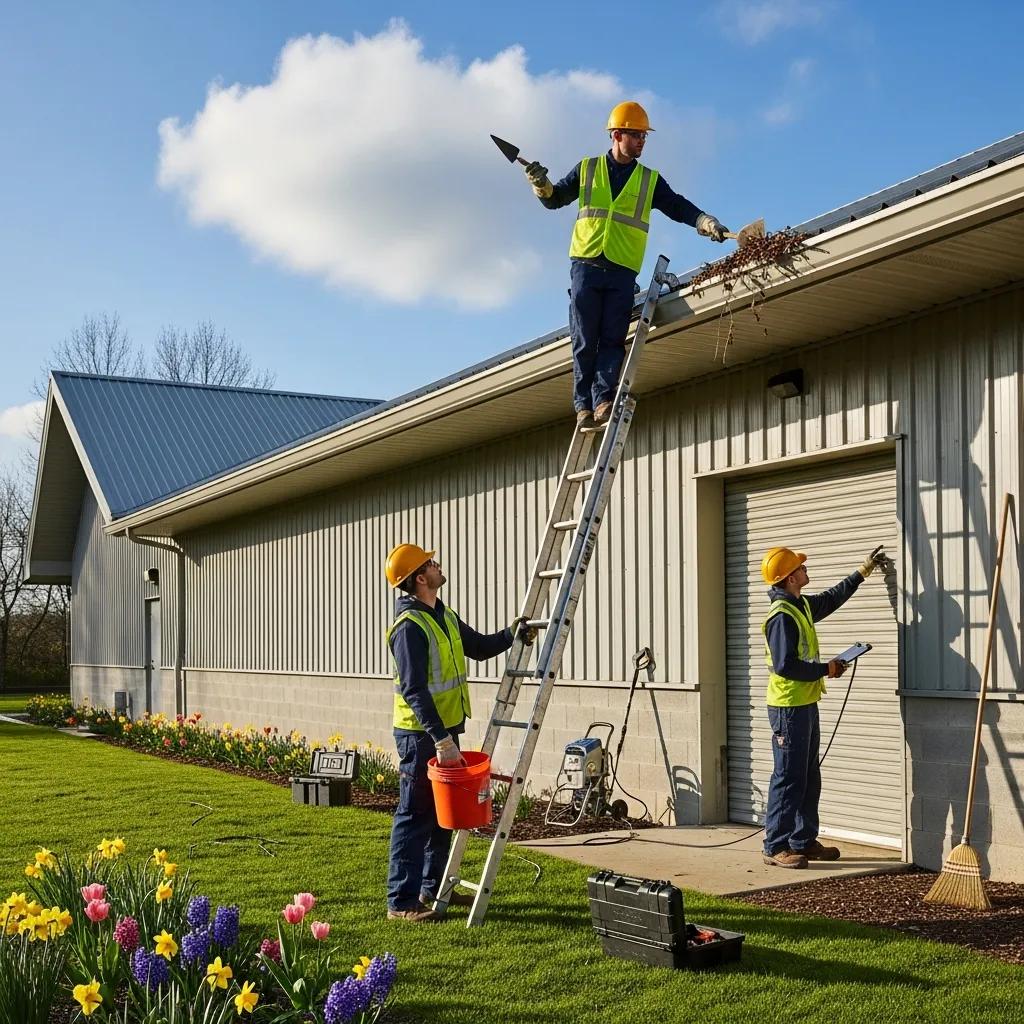
Seasonal maintenance aligns inspections and interventions with weather cycles to reduce risk and maintain performance; spring and fall are critical windows for preventative work, while winter requires snow and drainage management to avoid overload.
The recommended seasonal tasks include cleaning, sealant checks, fastener inspection, gutter clearing, roof panel checks, and HVAC servicing timed to local climate demands.
The following paragraphs present a spring/fall checklist and a compact seasonal calendar table to help owners schedule work efficiently. After the table, guidance on winter snow-load management explains safe practices and prioritization for snow and ice events.
Spring and fall inspections should focus on removing winter debris, checking and resealing flashings and seams, inspecting fasteners for backing out, and ensuring gutters are clear to handle spring rains.
Regular HVAC servicing in spring maintains dehumidification capacity for the humid season, while fall checks prepare systems for heating cycles and condensation management during colder months.
| Component | Recommended Task | Frequency / Notes |
|---|---|---|
| Roof panels & seams | Inspect panels, reseal seams, check fasteners | Spring & Fall; after severe storms |
| Gutters & downspouts | Clear debris, verify slope & attachments | Quarterly; before heavy rain season |
| Fasteners | Torque inspection, replace washers/screws | Quarterly; replace corroded fasteners immediately |
| HVAC & ventilation | Service filters, condensate lines, check drainage | Spring & Fall; monthly filter checks during use |
| Foundation perimeter | Inspect drainage, remove debris, check sealing | Spring & Fall; after heavy runoff events |
This seasonal table condenses key actions so owners can plan cyclical maintenance and avoid overlooked items that often lead to leaks or warranty disputes.
What Should Be Included in a Spring and Fall Metal Building Inspection Checklist?
A concise, actionable checklist streamlines inspections and creates an auditable trail that supports warranty claims and long-term maintenance planning. Inspect the roof for loose panels, damaged sealant lines, and backed-out fasteners; clear gutters and confirm downspouts route water away from the foundation; check door and window seals for compression set or tears and service HVAC filters and condensate drains to prevent moisture buildup. Include photo documentation, dates, and brief notes for each item to create a record; prioritize safety items like structural deformations and active leaks for immediate remediation. Estimated time per inspection varies by building size, but a typical small commercial building exterior inspection takes 1–3 hours, while larger facilities may require a half-day or more.
How Do You Manage Snow Load and Drainage During Winter?
Managing snow load and drainage protects roof structure and prevents sudden failures by reducing weight buildup and ensuring meltwater drains properly rather than refreezing into ice dams. Remove excessive snow using safe rooftop snow removal crews or rooftop rakes designed for metal panels; avoid using sharp tools that can puncture panels or strip coatings. Maintain clear gutters and downspouts heading into freeze-thaw cycles and consider heat tracing or deicing strategies for critical eaves where permitted; ensure drains and scuppers remain free of ice. Monitor roof deflection and interior signs of stress—any visible sagging or new interior leaks demand immediate professional assessment to avoid structural collapse.
How Do You Maintain Specific Metal Building Components for Optimal Performance?
Component-specific maintenance addresses the unique failure modes of roofs, panels, foundations, doors, windows, and HVAC systems to preserve weather-tightness and operational efficiency. Each component requires targeted inspection points, appropriate materials for repairs, and a schedule that reflects exposure and usage intensity. The next subsections detail best practices for metal roof and panel maintenance and for foundation, door, window, and HVAC care, including tools, materials, and safety practices to keep systems functioning and to minimize long-term repair costs.
What Are Best Practices for Metal Roof and Panel Maintenance?
Maintaining metal roofs and panels combines careful inspection, gentle cleaning, correct fastener management, and timely recoating to extend service life and prevent leaks.
Understanding the fundamental design principles of metal roofing systems, such as accommodating thermal expansion, is crucial for effective maintenance.
Metal Roofing Systems: Design for Thermal Expansion
1. The Army has used metal roofing systems for many years with great success. In the past, flat sheets were fabricated and seamed by hand at the jobsite. Recently, however, several new systems have been developed for which metal panels are prefabricated, shipped to the construction site, and assembled using new techniques. Current Corps of Engineers Guide Specifications are outdated with respect to these new products. The design and method of application differ among products still, any system to be used in Army construction must meet critical design criteria. In particular, the system as applied must allow for thermal expansion and contraction with changes in ambient conditions, and the Guide Specifications will have to be edited to reflect this. This report compares the features of several metal roofing systems on todays market.
Investigation of Standing Seam Metal Roofing., 1986
Inspect panel laps, sealant lines, and fasteners at least quarterly; tighten or replace fasteners that show backing out and ensure neoprene washers remain intact to preserve watertightness. Use low-pressure washing techniques and appropriate detergents for cleaning—high-pressure washing can strip paint and damage seals—followed by spot priming and recoating where coatings are compromised. Recoat cycles depend on exposure and coating system, but monitor film integrity annually and plan for professional recoating or touch-ups when paint adhesion or protective layers show wear.
How Should You Inspect and Care for Foundations, Doors, Windows, and HVAC Systems?
Foundation, door, window, and HVAC maintenance protects the building envelope and prevents moisture ingress, settlement issues, and energy loss that lead to long-term damage. Inspect foundation perimeter for erosion, standing water, or cracks and verify that grading and downspouts direct water away from the structure; remediate poor drainage promptly to avoid settlement. For doors and windows, check seals, gasket compression, and sill drainage features and replace weatherstripping that has compressed or torn to maintain weathertightness. HVAC maintenance includes scheduled filter replacement, cleaning condensate pans and lines, and ensuring proper insulation and drainage for ductwork to limit condensation and maintain efficiency. When systems are complex or warranty-bound, engage qualified technicians to perform certified service and provide documentation.
| Component | Common Problem | Preventative Action | Tools/Materials |
|---|---|---|---|
| Roof panels | Loose fasteners, seam failure | Torque checks, reseal seams | Torque wrench, butyl sealant, neoprene washers |
| Gutters/downspouts | Clogs and sagging | Clear debris, reinforce hangers | Ladder, gutter scoop, hangers |
| Doors/windows | Compressed seals, leaks | Replace weatherstripping, seal frames | Weatherstrip, silicone sealant |
| Foundation | Poor drainage, settlement | Regrade, install drains, inspect cracks | Shovel, gravel, inspection mirror |
| HVAC | Clogged filters, condensate overflow | Monthly filter changes, clean drains | Filters, condensate pump, wet-vac |
What Tools and Materials Are Recommended for Preventative Metal Building Maintenance?
Equipping a maintenance toolkit with inspection tools, safe cleaning equipment, and the right repair materials empowers owners to perform effective DIY maintenance and to communicate clearly with professionals. Essential inspection tools include flashlights, magnet gauges for coating checks, ladders with fall protection, and basic measuring tools; cleaning requires pressure washers used at safe settings and appropriate detergents, while repairs require sealant guns, torque wrenches, spare fasteners with neoprene washers, and corrosion-inhibiting primers. Safety gear—gloves, eye protection, respirators when sanding or using chemicals, and fall arrest systems for rooftop work—is mandatory. The following list groups tools by task to help owners decide what to own versus rent.
Essential tools grouped by task:
- Inspection: flashlight, moisture meter, inspection mirror, camera for documentation.
- Cleaning: adjustable-pressure washer set to safe PSI, soft-bristle brushes, biodegradable detergent.
- Repair: cordless drill, torque wrench, sealant gun, spare neoprene-washer fasteners, rust-inhibiting primer.
- Safety: harness, guide-ropes, non-slip footwear, protective eyewear, respirator for chemical use.
Owning basic items like a torque wrench and sealant gun is cost-effective for frequent inspections, while specialized equipment—such as aerial drones for roof surveys or industrial pressure washers—may be rented as needed to reduce capital expense.
Which Equipment Is Essential for Cleaning, Inspection, and Repairs?
Selecting the right equipment reduces risk and increases the effectiveness of maintenance tasks, especially when working at heights or on large surfaces. For inspections, consider using drones with high-resolution cameras for safe, fast roof surveys combined with handheld moisture meters for interior checks; drones minimize ladder use but require trained operators and compliance with local regulations. For cleaning, choose low-pressure washing systems and soft detergents that preserve coatings, and avoid abrasive or high-psi settings that damage paint. For repairs, reliable torque wrenches, compatible sealants (butyl or polyurethane for seams, silicone for non-walking flashings where compatible), and corrosion-inhibiting primers are necessary to restore protection. Always follow product manufacturers’ application guidelines and use recommended PPE for chemical handling.
How Do Protective Coatings and Sealants Prevent Rust and Leaks?
Protective coatings and sealants act as physical and chemical barriers that prevent moisture and oxygen from contacting bare metal, and many modern primers include corrosion inhibitors to interrupt electrochemical processes that cause rust.
The development of advanced corrosion inhibitor coatings, including those with slow-release mechanisms, continues to be a focus in protecting metal structures.
Corrosion Inhibitor Coatings for Metal Protection
ABSTRACT: Abstract DetailsYear and Degree2005, MS, University of Cincinnati, Engineering : Materials Science.AbstractSlow release of corrosion-inhibitive paint pigments is a great challenge to the paint industry because of the urgent need to replace chromate-containing pigments. It was demonstrated that Tolyltriazole (TTA), benzotriazole (BTA) and 1,2,4-triazole (TA) are effective in protecting aerospace alloy AA2024-T3 from corrosion attack. Unfortunately, like most effective corrosion inhibitors, they are too soluble for use in paints. In this research, we present a novel method to modify these selected water-soluble organic inhibitors particles. A plasma polymerization technique was used to deposit an ultrathin polymer film on the surface of the inhibitor particles. Infrared spectroscopy (FTIR), time-of-flight secondary ion mass spectroscopy (TOFSIMS), scanning electron microscopy coupled with energy-dispersive X-ray spectroscopy (SEM/EDX), transmission electron microscopy (TEM) and contact a
Corrosion inhibitor system for superprimer coatings on aerospace alloy, 2005
Typical sealant families include butyl-based tapes for seam repair and polyurethane or polysulfide mastics for flexible, durable joint sealing; choose chemistries compatible with the roof coating system to avoid adhesion failures. Reapplication intervals depend on exposure and product class, but annual inspections for sealant condition and recoating cycles based on coating system service life will prevent leaks and extend the structure’s lifespan.
When Should You Call a Professional and How Does Maintenance Affect Warranties?
Calling a professional is necessary for structural repairs, warranty-sensitive inspections, and complex systems where improper repairs can void coverage or create safety hazards. Professionals provide documentation, certified repairs, and technical assessments required by many manufacturers to validate warranty claims; failing to follow prescribed maintenance intervals or using unapproved materials can jeopardize coverage. The next subsections list tasks that require expert assistance and explain how to document maintenance to maintain warranty validity, including the types of records and frequency typical warranties stipulate.
What Maintenance Tasks Require Expert Assistance?
Tasks that carry safety, structural, or warranty risk should be performed by qualified professionals to ensure compliance and quality outcomes. Structural repairs, seam replacement across large spans, replacement of load-bearing members, electrical or HVAC rewiring, and complex insulation retrofits are examples where DIY work is inappropriate and may breach warranty terms. Professionals supply detailed inspection reports, photos, and repair recommendations; these deliverables form the documentation trail needed for warranty claims. For logistical ease when scheduling professional teams, owners may coordinate transport and access arrangements in advance—Metal Building Contractors Near Me can assist with scheduling and logistics for on-site inspections and crew transport, noting that available site references indicate an associated limousine rental service in Houston that may support local transport needs.
How Does Regular Maintenance Impact Metal Building Warranty Validity?
Regular maintenance preserves warranty validity by meeting common clauses that require routine inspection, timely repairs, and use of approved materials or contractors; manufacturers often expect records showing that an owner followed recommended inspection cadences and addressed issues promptly. Maintain a simple documentation system that logs dates, actions performed, parts replaced, product brand and part numbers, and photos before and after repairs; keep copies of professional inspection reports and invoices to support claims. Failure to document inspections or using incompatible repair materials—such as mismatched sealants or non-approved fasteners—can result in denied claims, so follow manufacturer guidance and retain all records in a centralized, dated file for the life of the warranty.
For assistance coordinating professional inspections and transport logistics, Metal Building Contractors Near Me provides lead-generation services and scheduling support; be aware that available online references describe an associated Houston-based limousine rental operation, which may be relevant when arranging crew transport or client transfers. Use vendor-provided documentation and written inspection reports to ensure warranty requirements are met when professionals perform repairs.